Friday, August 16, 2013

India turns screw again on gold imports

(Reuters) - India turned the screw on gold buying again on Wednesday, banning imports of coins and medallions and making domestic buyers pay cash, a day after hiking bullion import duty to a record 10 percent.
Gold bars are displayed at a gold jewellery shop in Chandigarh November 4, 2009. REUTERS/Ajay Verma/Files
The government is trying to curb apparently insatiable demand from Indians for gold which sent its current account deficit to a record in 2012/13, but although buying slowed in June it revived in July, triggering the latest restraints.
All imports of gold will now need a licence from the foreign trade office and will have to be brought into a customs bonded warehouse, Economic Affairs Secretary Arvind Mayaram said.
He added that unrefined gold would be added to existing rules stipulating that 20 percent of all imports must be used for export, which is usually in the form of jewellery.
The move to force cash payments revives an earlier central bank directive which was dropped last month.
Imports by the world's biggest bullion buyer hit a record 162 tonnes in May as global prices fell, prompting a duty increase to 8 percent. Imports dropped to about 31 tonnes in June but revived to 47.6 tonnes in July, according to the finance ministry.
With the rupee touching a record low last week, domestic prices are high and premiums paid for bullion over London prices are near $45 an ounce, up from $30 an ounce last week.
But even that has failed to deter buyers and industry players remain sceptical that these measures will have a serious impact on demand among Indians, who traditionally buy gold to give at festivals and weddings.
Gold coins and bars constituted about 36 percent of total demand in 2012.
The government wants to contain imports to "well below" last year's 845 tonnes this year.

The curbs on gold come as India imposed restrictions on foreign exchange outflows in its latest attempt to prop up the rupee.

Sunday, August 11, 2013

Global Challengers from India


  • Bajaj Auto
  • Bharat Forge
  • Bharti Airtel
  • Crompton Greaves
  • Dr Reddy's Laboratories
  • Godrej Consumer Products
  • Hindalco Industries
  • Infosys
  • L&T
  • Lupin Pharmaceuticals
  • M&M
  • Motherson Sumi Systems
  • Reliance Industries
  • Sun Pharma
  • Tata Chemicals
  • TCS
  • Tata Motors
  • Tata Steel
  • Vedanta Resources
  • Wipro

Tuesday, July 30, 2013

SMALL INFO. ABOUT KFC

How it all began!

The Colonel Harland David Sanders was born September 9, 1890 in Indiana, USA. The young Harland Sanders had many jobs such as a farmhand, a bus conductor, a steam boat driver, a soldier, and a salesman. Eventually he became a business man owning a petrol service station in Kentucky, one of the 52 states of the USA.
Many travelers stopped at his service station wanting refreshments and food. The Colonel saw this as a business opportunity and decided to offer food to these customers. The Colonel enjoyed making his customers happy – he was passionate about entertaining them with excellent food and superb service.
His food and service was so good that he was mentioned in several newspapers around the country. As a result he had to expand his dining room to keep up with the increase in new customers. This 'Customer Mania' experience made people drive from far away just to visit the Colonel's restaurant.

A winning recipe!

After careful testing for many years to find just the right combination of ingredients, the Colonel knew that he was at last onto a winning recipe. When he added the 11th and final ingredient, he was truly satisfied that he had created the best chicken he had ever tasted – he wanted to share it with the world!
To this day, the Original Recipe of 11 Herbs and Spices is one of the biggest secrets in the world - “the Finger Lickin' Taste” of KFC! The Colonel also introduced the idea of using a pressure cooker to cook the chicken. This ensured that the product cooked faster and produced the best results ever.
The Colonel decided that his Original Recipe needed to be introduced to people further from his home and from his state. At the age of 66, he started selling his idea of Kentucky Fried Chicken by traveling from town to town, preparing his famous chicken recipe for restaurants and their employees. Soon everybody wanted to try it – families stood in queues to try his great Original Recipe.
Colonel Sanders appeared on national Television promoting the idea of Kentucky Fried Chicken. He always licked his fingers as he described the Original Recipe taste to viewers – this is how the slogan “It's Finger Lickin' Good” developed

Wednesday, May 22, 2013

UNILEVER LTD


Unilever

Industry Area: Branded and packaged goods including foods and home and personal care products.
Overview
Market share/importance:
Unilever’s mission statement is ‘meeting the everyday needs of people everywhere’, and the multinational definitely has a huge and expanding global reach. Unilever proudly declares that every day 150 million people are choosing their brands ‘to feed their families and clean their homes’. Unilever is one of the world’s top makers of packaged consumer goods and moves countless products like deodorants, fragrances, soap, margarine, tea and frozen foods all over the world. The corporation sells products in over 150 countries and has annual sales of approximately $ 46 billion (£31,5bn). Unilever controls subsidiaries in at least 90 countries and employs 295,000 (in 2000) people [1]. Unilever is one of the world’s top three food firms -after Nestle and Kraft- and the world’s second largest packaged consumer goods company –behind Procter & Gamble.
However, in spite of Unilever’s vast size and presence worldwide, the company’s actual visibility is surprisingly low. Anonymity hides the company’s importance. Unilever does not retail under its own name, preferring brand names to create the illusion of diversity. Who does not know brand names like Magnum, Omo, Dove, Knorr, Ben & Jerry’s, Lipton, Slim-Fast, Iglo, Unox, Becel, and Lever2000? They’re all part of the ‘Unilever armada of brand names’. To make sure the brand names do not go unnoticed, Unilever spends huge amounts of money on marketing and advertising. Advertising has always been a keystone of Unilever’s businesses. The Dutch-Anglo company is likely to be the world’s number one advertiser. (Advertising Age estimate a 1999 global media spend of $3.7bn (£2,539bn), of which $3.1bn (£2,127bn) was outside the US, making Unilever the world's #1 advertiser)[2].
History:
Butter & Soap
Unilever was formed in 1930 when the Dutch margarine company Margarine Unie merged with British soapmaker Lever Brothers. Both companies were competing for the same raw materials (e.g. oilseeds), both were involved in large-scale marketing of household products and both used similar distribution channels. Between them, they had operations in over 40 countries. Margarine Unie grew through mergers with others margarine companies in the 1920s. Lever Brothers was founded in 1885 by William Hesketh Lever. Lever established soap factories around the world, and had plantations in many Third World countries. In 1917, Lever began to diversify into foods, acquiring fish, ice cream and canned foods businesses.
Control of the supply chain
In Unilever one activity has frequently led to another. The oil seeds crushed for use in margarine and soap yielded a by-product known as "cattle cake" which prompted a move into animal feeds. Processing the oil for use in margarine and soap yields other by-products, glycerine and fatty acids, which led Unilever into chemicals, a $2-billion (£1,372bn) business in 1986. (In 1997 Unilever sold its speciality chemicals business to Imperial Chemical Industries (ICI) for US$8bn (£5,489bn) Those millions of consumer products need to be packaged, which resulted in Unilever operating twenty-four packaging plants in six European countries. Consumer goods must also be transported, which turned Unilever into one of the largest truckers in Britain - and for fifty years, before it was sold in 1985, the Unilever-owned Palm Line was one of the biggest shipping companies out of West Africa.
Fishing is another area of interest. Unilever farms for salmon in Scotland, has prawn farms in several Asian countries, and is the major owner of a vertically integrated fishing business out of West Germany that includes catching the fish in deep-sea trawlers, processing the catch, and then selling the fish in company-owned shops and restaurants that carry the Nordsee name. Unilever made a public commitment to move towards buying all its fish from sustainable fisheries by 2005. To meet this objective Unilever and the World Wide Fund for Nature (WWF) jointly set up the Marine Stewardship Council (MSC) as a platform to promote sustainable fishing internationally (1996). The MSC is now said to be an ‘independent, non-profit body with a set of principles and criteria for sustainable fishing’.
Recent acquisitions
Major acquisitions during the 80s included Brooke Bond in 1984, greatly strengthening the Unilever’s tea interests, while Chesebrough-Pond’s Inc, in 1987, brought a major additional stake in the US personal product market, as well as strengthening Unilever’s position in the world skin care market.
(Unilever has been considered a ‘sleeping giant’ for a long time, especially during the 80s. In the 90s Unilever tried to shake this image as a ‘cumbersome, inflexible corporation’ off.) Again, in the 90s, there were numerous acquisitions, and Unilever began to put into effect its planned moves into Eastern Europe. However, the company largely withdrew itself from packaging and all agricultural operations, apart from Plant Breeding International Cambridge (R&D based company developing products (in the agriculture and horticultural sector) mainly under license, sold to Monsanto in 1998] and the plantations. Much of the company’s agribusiness assets were sold as part of the company’s policy to focus on its core activities.
Strategy
In September 1999 Unilever announced its intention to focus on fewer, stronger brands to promote faster growth. The company is whittling its brands down to 400 (from 1,600) including familiar brands such as Dove, Lux, Lipton, Magnum and Calvin Klein fragrances. (Consulting firm PricewaterhouseCoopers has been hired by Unilever to sell off ten of the firm’s 70 food brands) [3].
The concentration on innovation and brand development on a focussed portfolio of 400 leading brands is part of Unilever’s latest growth strategy, called ‘The Path to Growth’, designed to accelerate top line growth and step up the rate of margin improvement in five years time. In February 2000 the company announced a series of linked initiatives (organizational changes, restructuring) to align the entire organization behind these growth ambitions.
The shake-up of its top management, splitting the company into two, separate global units –food and home, and personal care-- was one of these initiatives. And Unilever has started selling off any subsidiary businesses which are making less than average profits, and ‘decentralising’ control of subsidiaries, with the corporate HQ in Europe just monitoring profit levels – and making sure they are maximised. This heavy focus on profit means cost-cutting - especially minimising workers’ pay.
Another key component of the growth strategy is e-commerce. Unilever wants to step up the use of the Internet in order ‘to improve brand communication/marketing and on-line selling & to simplify business-to-business transactions throughout the supply chain’. India’s Satyam Computer Services Ltd has recently won an information technology services contract from Unilever [4]. Unilever also made deals with Compaq, IBM, Microsoft, Excite@Home, Ariba Inc. (leader in all phases of business-to-business e-commerce) and WOWGO to enable a faster adoption of global e-commerce opportunities. In February 2000, Unilever and iVillage formed a new Internet company. Unilever committed £130 million to e-business initiatives in 2000 and hopes to create a ‘mall that never closes’.
In its bid to concentrate on fewer, core brands, Unilever disposed of 27 businesses during 2000 for a consideration of approximately $642 million (£404,7 million). The company sold, amongst others, the European Bakery Business, Benedicta a culinary business in France and various other small businesses and brands. The same year, Unilever acquired several high-profile companies, including American based Bestfoods, which strengthened Unilever’s market position remarkably. Other important acquisitions were Groupo Cressida Central America Foods (Home & Personal Care) Corporation JABONERIA NA (Ecuador, Foods, Home & Personal Care), Amora Maille (France, Culinary Products) Codepar/SPCD (Tunisia, Home & Personal Care), Ben & Jerry's (USA, Ice Cream), and SlimoFast (USA, Slimming Products). The total purchase consideration for businesses other than Bestfoods (total number: nineteen) was approximately $4,451 million (£2,8 million) [5]. The acquisition of Bestfoods made Unilever's foods business the world's second largest after Nestle.
Unilever keeps selling businesses. In 2002, Unilever sold at least 19 of its food brands including cleaning firm Diversey Lever and cooking oil firm Mazola. Brands that are here to stay include Hellmann’s mayonnaise, Bird’s Eye, Persil, and Ben & Jerry’s ice cream. On these brands Unilever will focus its tremendous advertising efforts. The company has closed several big advertising deals on airtime with Carlton and Granada. Also, Unilever struck a massive deal with billboards company JCDecaux, the biggest poster contractor in Europe. The French firm will handle all Unilever’s poster advertising across 22 European countries for the next five years.

Tuesday, May 21, 2013

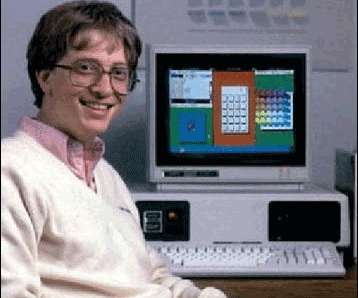
About BILLGATES.......

How did bill gates get started
So just how did Bill Gates get started to becoming one of the world’s richest man?  Bill Gates, real name William Henry Gates III, is a co-founder of one of the most famous and recognized computer software companies in the world, Microsoft. He was born in the United States on October 28, 1955, in Seattle, Washington to William H. Gates II and Mary Maxwell Gates.

Background

Gates has two sisters and they enjoyed a comfortable lifestyle as they were growing up. His mother was a school teacher who was also the Chairperson for the United Way. His father was an attorney in Seattle.
He attended Harvard University where he worked on a version of computer programming language known as BASIC with Paul Allen. Bill Gates did not graduate from Harvard; instead, he left Harvard during his junior year to start the company that has made him so famous and the richest person in the world (according to Forbes), Microsoft Corporation.
Microsoft was formed in 1975 and it has completely changed the way the world uses computers today. Originally named, Micro-soft, which was an abbreviation of the microcomputer software, the company changed its name to simply, Microsoft. Bill gates retired from the CEO position at Microsoft in 2008.
Criticism
Even though Gates founded one of the strongest and most influential companies in the world, along with his success has came great criticism. Many criticized Gates for making Microsoft a monopoly and limiting the abilities of competitors such as Apple Computer and more. Gates has fought several battles in the courtroom since the development of the Microsoft Corporation. Legal battles have included: Apple Computer, Netscape, Opera, WordPerfect, and sun Microsystems.

The Richest Man in the World

In 2006, it was estimated by Forbes that Bill Gates’ net worth was $56 billion USD. (Too old, need 2009) He has held the number one position on Forbes’ list since the mid 90’s, except in 2008 when controversy between a Mexican billionaire, Warren Buffet, and Bill Gates’ fortunes were examined, or somewhat at least. In the early part of 2008, Forbes stated that Warren Buffet knocked Bill Gates from the number one position; however, the Mexican billionaire, Carlos Slim Helu’s fortune was not tabulated in the list. As 2008 continued on, speculations were made that Bill Gates, once again, became the richest man in the world, where he maintained his title through 2009 at $50 billion USD.

Investment Style

Bill Gates’ investment style has been compared by many to that of Warren Buffet. Bill Gates owns his own investment company called Cascade Investment, LLC which Gates’ uses to embark on several of his personal investing adventures.
Cascade doesn’t take part in investing in technology like one would think after Gates’ reign over Microsoft; instead, Cascade takes part in investments that will offer long term value. Basically, Cascade could own millions of stock options in hundreds of companies; however, instead they invest majorly in a small amount of companies where they can hold a major share of the company. For instance, the garbage industry has Gates’ attention. Cascade has invested in a company known as RSG on the NYSE or Republic Services. Cascade (Gates) owns 13% of the garbage collecting company.
Gates’ investment style is like a “whole market” approach where capitalization upon select stocks within a particular industry that is on the rebound is important. His investments are diversified where “old economy” stocks are utilized and through the purchasing of bonds

Monday, May 20, 2013

Management Guru.......


In India , the word 'guru' is not used in a cavalier fashion. It denotes certain level of wisdom, achievement and respect given by the disciples.

It is not granted by any position, power or by legal processes. It is neither conferred nor self-proclaimed. The title sits lightly on those who are worthy of it, unspoken and understood.

From that point Coimbatore Krishnarao Prahalad can be called a guru. He was insightful and definitely provocative. He was an interesting combination of an academic and a practitioner.

His thought process got formulated by observing businesses in action and his ideas thus formulated altered many businesses. He was communicator par excellence and had ability to focus on the emerging scenarios.

The ivory tower academics - we can call them epsilon estimators - were disdainful of him. For the pure academics any discussion of the real world is anathema. But CK was not to be bound by such notions particularly in the business management world.

He was a graduate in Physics from Loyola College-Chennai (then Madras). He worked in Union Carbide for nearly four years which according to him - in a way shaped his ideas of management and then did his masters from IIMA and his DBA from Harvard in 1975. Then he taught at IIMA for a while to return to Stephen M Ross School of Business at the University of Michigan as a Distinguished Professor.

Two of his major ideas are about core competencies of the organization and leveraging on it and the idea of looking at poor as source of profit than an object of charity.

During the eighties and early nineties it was fashionable to create conglomerates which consists of unrelated businesses since low correlated or unrelated businesses reduce risk at the time of crisis.

But he turned the entire idea on its head and suggested the need for corporations to focus on their main strength or core competencies. His seminal work with Gary Hamel (HBR May-June 1990) won him the Mckinsey Prize and maximum number of reprints were sold of his paper.

He compared the 'Diversified Company' as a tree and major limbs as core products, smaller branches as business units' leaves and fruit as end products and the root system which nourishes and stabilizes all things as core competencies.

Many an award followed and he was always in the top ten of every conceivable lists of management thinkers - even though Indra Nooyi of PepsiCo feels all such lists are only worth keeping in the garage before entering the house!

He was a recipient of Padma Bhushan and was actively involved in the India @75 initiative of CII. His discussion on core competencies had its quota of critics -  some with justification - particularly in the emerging market context where one teacher school flourish (who teaches from Mathematics to English to Civic Sense) and where existing traditional businesses get in to unrelated areas and succeed. Rice millers and Banana Farmers become business barons in areas of high technology.

His other big idea is the formulation about the bottom of the pyramid (BOP) as market opportunities for corporate.

C K Prahalad in an interview with the renowned Professor of Strategy, J Ramachandran of IIM-Bangalore in 2004 (pioneering a new paradigm IIMB Management Review 2004) had elaborates his idea on the BOP.

JR: But the poor have always been there. Why do we suddenly see them as providing a radical opportunity?

CK: I think two or three discontinuities are coming together to create an opportunity. One, the regulatory framework is going down dramatically worldwide. And therefore there are opportunities for a commercially oriented view of the poor, rather than subsidies, poverty alleviation schemes and so on.

The second factor is the advent of digital technologies, which provide a different way to connect poor people with the rich. Take for example the cell phone. For the first time in history, the most advanced technology is being totally driven by the poorest people - 250 million Chinese with cell phones; 1 million Indians being added every month (in a year we went from 3-4 million to 20 million, as of today); Brazil  with 35 million - in three or four years, these three poor countries alone will have about 450-500 million cell phones. And the US has only 150. So who is driving the cell phone business? It is the poor.

In the same interview he elaborates on the continuing theme of his research in the management discipline. He says "If you look at what I have done over the years, I first worked on the challenges of managing multinationals.

The important issues, as I pointed out way back in 1987, are global integration and local responsiveness – two forces that no multinational can avoid. This fundamental tension will always be present. In fact that has had the most enduring life.

You can call it glocal; you can call it transnational; you call it anything you want, the fundamental tension hasn't gone away. While a lot of people have talked about managing the multinational, nobody has challenged this basic premise. The question is how to manage it."

Cavincare of Chennai was already into sachet shampoos and various brands of pan masala in pouches were big market success.

The MNCs of the west which were always in bigger; larger; greater mode could not understand the market of the poor. They were used to selling 10 bottles of shampoo in a crate and offer two bottles as bonus.

The model followed by Unilever or P&G was to shift as much as possible from Wal-Mart to the basement of households. In other words each American household was a retail store except what they hold is consumption and what the mom-pop store holds is inventory.

The MNCs could not comprehend the idea of 50g packets and top line as well as bottom line getting bigger. CK consolidated this idea of poor as market, giving examples of Aravind eye hospital and Bank of Madhura - both from Tamil Nadu his home state. He could explain Dharavi as an opportunity and not a curse.

Many an MNC in India later followed the Cavincare route to target the poor. Even Biscuits are now sold in packs of one or two for as low as one rupee.  Of course not many agreed with him.

Critics which included his colleague at Ross school Aneel Karnani in his 2007 paper- maintained that at the bottom of the pyramid market is small to add to bottom line of big companies. It was suggested that the poor can improve their position by being entrepreneurs and not consumers. He was not deterred.

He was a co-founder and became CEO of Praja Inc. The goals of the company ranged from allowing people to access information without restriction - in a sense related to the bottom of the pyramid or BOP philosophy to providing test bed to various innovative ideas.

The venture did not succeed and laid off one third of its work force and was finally sold to TIBCO. Perhaps, the age old saying that professors should only profess and not try to practice has been validated by this venture!

He was a popular teacher and CEOs listened to him carefully since he was provocative and also incisive. He was concerned about India and its problems. Being one of the nine sons of a Sanskrit scholar and a Judge; CK was the product of the times of scarcity and India of ration queues - of the fifties and sixties.

He would have understood what it means to be poor since during those days for everything from rice to coffee powder to milk long queues were formed, and entrepreneurship was considered as low brow.. After growing up in such a milieu he has seen India rising and emerging as a global power.

He was on many boards and his Windsor Manor Lectures at Bangalore were eagerly awaited by the entrepreneurs of the South who are soft spoken are less brash compared to the Mumbai chieftains. He wanted a moral and ethical leadership shown by India and that comes from his roots. His demise has definitely left a void in the field of the management.

Sunday, May 19, 2013

FOUNDER OF ADIDAS AND PUMA ARE BROTHERS

The two companies were actually spawned from a bitter rivalry between the two. Brothers Adolf and Rudolf Dassler, were born in Germany. While Adolf was a sport fanatic, Rudolf was a great salesman.

They began a shoemaking business in the 1920s, but soon argued over everything including politics, women, and their business. Finally, in the 1940s Rudolf left the business and started his own across the river. Adolf renamed the original shoe shop Adidas and Rudolf established Puma. Today they are two of the world’s best known show brands!